
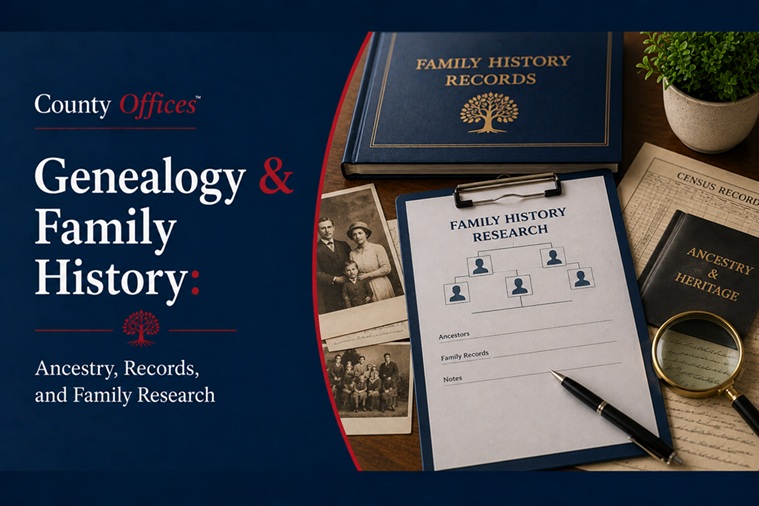
This genealogy guide covers what every family historian needs to know about researching ancestors, accessing federal and state records, using census data, finding immigration records, and combining traditional genealogy with DNA testing. Genealogy matters generate substantial search traffic because interest in family history has grown dramatically with the rise of consumer DNA testing, online record databases, and easier access to historical archives. This genealogy guide explains where to start, how to use primary sources, what county records reveal about ancestors, how to use FamilySearch and the National Archives, when to use DNA testing, and where state law makes records access meaningfully different. Every state-specific genealogy guide linked from this page is written for the specific records, archives, and access procedures that apply for that state.
What this genealogy guide covers
The genealogy and family history topic spans more ground than most beginners realize. This genealogy guide and the supporting state guides cover six distinct areas of genealogy research practice, each with its own state-specific variations.
Vital records research. Birth, marriage, and death certificates are the foundation of genealogy research. Each documents a specific event with names, dates, locations, and relationships. State vital records offices maintain current records (typically the past 75-100 years). Older records may be transferred to state archives or made available through online databases. The interaction between current vital records access and historical record availability varies significantly by state.
Census research. The federal census enumerates the U.S. population every 10 years. Census records are confidential for 72 years after taking, then released to the public. Each census includes different questions, so research strategy involves consulting multiple census years. State censuses also exist for many states between federal census years and provide additional research opportunities.
County records research. Probate records, deed records, court records, tax records, and other county records provide rich genealogical detail. Probate records document family relationships through wills and estate inventories. Deed records show where families lived and how property transferred between generations. Court records reveal disputes, guardianships, and family matters. Tax records can place individuals in specific counties at specific times.
Immigration and naturalization research. Immigration records depend on the time period and port of entry. Ship passenger lists for Ellis Island arrivals (1892-1957) are widely available. Earlier immigrants (1820-1891) appear in customs passenger lists. Naturalization records (becoming a U.S. citizen) are kept by federal courts and contain genealogical detail including birthplace, arrival information, and witnesses.
DNA testing for genealogy. Direct-to-consumer DNA tests (AncestryDNA, 23andMe, MyHeritage, FamilyTreeDNA) provide ethnicity estimates and lists of genetic matches who share DNA segments. DNA testing is most useful when combined with traditional genealogy research. Genetic matches can confirm or contradict family tree research. DNA can help identify biological parents in adoption cases. Limitations include ethnicity estimate inaccuracy and privacy considerations.
Professional genealogy research. Professional genealogists handle complex research problems, foreign records, court-required research (estate matters), and overcoming brick walls in family research. Certified genealogists meet established standards through professional certification bodies. Professional research is typically billed hourly with substantial costs for complex projects, but can save years of self-research on difficult problems.
Universal genealogy guide: how genealogy research works regardless of state
Five core questions apply to genealogy research regardless of which state controls. Each universal genealogy guide linked here addresses one of them in depth.
How to start researching your family history. Begin with what you know. Document your immediate family (yourself, parents, siblings, grandparents) with names, dates, and locations. Interview living relatives for family stories and records. Gather home sources (family photos, documents, Bibles, letters) before pursuing external research. Then work backward in time using primary sources. The National Archives genealogy resources provide a starting framework. The genealogy guide on getting started covers the first steps in detail.
When you should use primary versus secondary sources. Primary sources are records created at or near the time of the event by people with direct knowledge (birth certificates, death certificates, census records, marriage records, military records). Secondary sources are records created later or by people without direct knowledge (family histories, biographies, indexes). Primary sources are more reliable for genealogical evidence. Secondary sources can provide leads but should be verified through primary sources when possible. The genealogy guide on sources covers the distinction.
How to find old census records. Federal census records from 1790-1950 are publicly available through the National Archives and online databases. The National Archives Census records cover the complete federal census collection. The 1890 census was largely destroyed in a 1921 fire and is mostly unavailable. State censuses fill some gaps between federal census years in many states. The genealogy guide on census research covers research strategy by time period.
Common genealogy research mistakes. Researchers accept online family trees as fact without source verification. They assume name spellings remained consistent across generations. They ignore the historical context that affects how records were created and what they contain. They confuse two different people with the same name in the same area. They give up on brick walls without exhausting available records. The genealogy guide on common mistakes catalogs the errors that derail research.
When to hire a professional genealogist. Self-research works for most family history projects. Professional research makes sense for foreign records requiring language skills, court-required genealogy (proof of heirship for estates), DNA-related identification cases, brick walls in research that have resisted years of effort, and time-sensitive research with deadlines. The genealogy guide on hiring professionals covers the decision framework.
Genealogy guide by state
State law and record availability significantly affect genealogy research. Each state has its own vital records office, state archives, county record systems, and access policies. Florida vital records become available to genealogy researchers after specified periods (75 years for births, 50 years for deaths in most cases). Texas has rich county records but vital records have stricter access controls. California has extensive state archives and genealogy resources. New York has both excellent online resources and complex access rules due to large historical immigration populations. Each state-specific genealogy guide is written for the specific records and access procedures that apply.
State genealogy guide coverage at launch:
- Florida genealogy guide
- Texas genealogy guide
- California genealogy guide
- New York genealogy guide
- Illinois genealogy guide
State genealogy guide content for the remaining 45 states is being added as the site expands.
What makes genealogy research different across states
Beyond the universal genealogy guide content and state-specific procedures, certain state-level distinctions shape outcomes significantly.
Vital records access rules. Each state controls when vital records become publicly available for genealogy research. Most states restrict birth certificate access for 75-100 years. Death certificate access is typically restricted for 50-75 years. After restriction periods end, records become available without proof-of-relationship requirements. State-specific rules affect which generations are researchable through current vital records offices versus state archives.
State archives accessibility. State archives hold older vital records, military records, court records, and other historical materials. Access varies by state. Some state archives offer extensive online catalogs and digital collections. Others require in-person research visits. The Society of American Archivists directory maintains links to state archives. Each state’s archives operate under different access rules and digitization status.
County record digitization. County record digitization varies dramatically. Some counties have digitized centuries of records and made them available online. Others maintain only current records electronically with historical records on microfilm or paper. The amount of online versus on-site research varies significantly by county and project. State guides cover digitization status for the major counties in each state.
Adoption record access. Adoption record access varies dramatically by state. Most states historically sealed adoption records, making it impossible for adopted persons to obtain original birth certificates showing biological parent information. Many states have updated their laws to allow adult adoptees access to their original birth certificates under specific conditions. The American Adoption Congress tracks state-by-state adoption record access laws.
Native American and tribal records. Members of federally recognized tribes may have records maintained through tribal governments in addition to or instead of state records. Native American genealogy research often involves the Dawes Rolls, Bureau of Indian Affairs records, and tribal sources. The National Archives Native American records cover federal Native American records.
Recommended genealogy guide resources
The right resource depends on what you need to accomplish.
For free online genealogy research, FamilySearch is the world’s largest free genealogy database. Operated by the Church of Jesus Christ of Latter-day Saints, FamilySearch provides access to billions of records including census records, vital records, military records, immigration records, and church records from around the world. The site also offers research guides and family tree functionality. Free registration provides full access.
For federal records research, the National Archives maintains the federal records most useful for genealogy research including federal census records, military service records, immigration records, naturalization records, and federal land records. Many records are available online; others require ordering or in-person research. The USCIS Genealogy Program handles immigration and naturalization records from 1880-1957.
For immigration records, the Statue of Liberty Foundation Ellis Island records provide free access to Ellis Island passenger lists (1892-1957). Earlier immigration records (customs passenger lists 1820-1891) are available through National Archives and various online databases. Naturalization records before 1906 are kept by state and federal courts where the naturalization occurred.
For DNA testing, consumer DNA tests through AncestryDNA, 23andMe, MyHeritage, and FamilyTreeDNA provide ethnicity estimates and genetic match lists. Each company has different testing methodologies, database sizes, and matching algorithms. AncestryDNA has the largest matching database. 23andMe provides the most extensive health-related genetic information. The International Society of Genetic Genealogy provides nonprofit education on genetic genealogy.
For professional genealogy services, the Association of Professional Genealogists maintains a directory of professional genealogists. Certified genealogists meet established standards through the Board for Certification of Genealogists. Accredited genealogists are certified through ICAPGen. Professional research is typically billed hourly with substantial costs for complex projects but can save significant time on difficult research problems.
Frequently asked questions
The genealogy guide questions readers ask most often when starting any research come down to a handful of practical concerns. Each genealogy guide answer below covers the universal framework; specific record availability varies by state.
How do I start researching my family history?
The genealogy guide approach is to begin with what you know. Document your immediate family (yourself, parents, siblings, grandparents) with names, dates, and locations. Interview living relatives for family stories and records. Gather home sources (family photos, documents, Bibles, letters) before pursuing external research. Then work backward in time using primary sources. The National Archives genealogy resources provide a starting framework. Document sources for every fact to maintain research credibility.
What is the U.S. Census and how is it useful?
The federal census enumerates the U.S. population every 10 years. Census records are confidential for 72 years after taking, then released to the public. Census records typically include household members, ages, birthplaces, occupations, and relationships. Each census includes different questions, so research strategy involves consulting multiple census years. The National Archives Census records cover censuses from 1790 through 1950. State censuses also exist for many states between federal census years.
How do I find old birth and death certificates?
Birth and death certificates were not consistently kept by all states until the early 1900s. Where they exist, certificates are maintained by the state vital records office where the event occurred. For older records (typically over 75-100 years old), the records may be transferred to state archives or made publicly available through ancestry databases. The CDC vital records directory links to current state vital records offices. State guides cover older record availability by state.
What is the difference between primary and secondary sources?
Primary sources are records created at or near the time of the event by people with direct knowledge (birth certificates, death certificates, census records, marriage records, military records). Secondary sources are records created later or by people without direct knowledge (family histories, biographies, indexes). Primary sources are more reliable for genealogical evidence. Secondary sources can provide leads but should be verified through primary sources when possible. The Genealogical Proof Standard provides standards for evaluating evidence.
How do I find immigration records?
The genealogy guide approach to immigration research depends on the time period and port of entry. Ship passenger lists for Ellis Island arrivals (1892-1957) are available through the Statue of Liberty Foundation Ellis Island records. Earlier immigrants (1820-1891) appear in customs passenger lists. Naturalization records (becoming a U.S. citizen) are kept by federal courts and contain genealogical detail including birthplace, arrival information, and witnesses. The USCIS Genealogy Program provides immigration records.
How can county records help with genealogy?
County records contain rich genealogical detail. Probate records (wills, estate inventories) document family relationships and material possessions. Marriage records confirm relationships. Property records (deeds) document where families lived and how property transferred between generations. Court records document disputes, guardianships, and civil matters. Tax records can place individuals in specific counties at specific times. Each state guide covers the county records useful for genealogy research in that state.
What is FamilySearch?
FamilySearch is a free genealogy database operated by the Church of Jesus Christ of Latter-day Saints. It contains billions of records including census records, vital records, military records, immigration records, and church records from around the world. FamilySearch is free to use and registers users for full access. Many of the records on commercial sites like Ancestry are also available on FamilySearch for free. The site also offers research guides and family tree functionality.
How do I use DNA testing for genealogy?
Direct-to-consumer DNA tests (AncestryDNA, 23andMe, MyHeritage, FamilyTreeDNA) provide ethnicity estimates and lists of genetic matches who share DNA segments with you. DNA testing is most useful when combined with traditional genealogy research. Genetic matches can confirm or contradict family tree research. DNA can help identify biological parents in adoption cases. Limitations include ethnicity estimate inaccuracy, privacy considerations, and the requirement that matches must also have tested.
What is genealogy research evidence?
Genealogy evidence consists of facts derived from sources that support specific conclusions about ancestors. The Board for Certification of Genealogists standards require analyzing evidence, resolving conflicts between sources, and citing sources for every fact. Direct evidence states the fact directly (a birth certificate states the date of birth). Indirect evidence requires interpretation (an age stated on a census record implies a birth year). Negative evidence is the absence of expected information.
How do I find military service records?
Military records are kept by the National Personnel Records Center for service after WWI and by the National Archives for earlier service. The NPRC veterans service records page covers more recent records. Civil War records, Revolutionary War records, and earlier military records are available through the National Archives in Washington and online. State adjutant general offices have state militia records. Pension files often contain extensive genealogical information about veterans and their families.
How accurate are online family trees?
The genealogy guide assessment of online family trees is that accuracy varies dramatically. Trees with source citations from primary records are more reliable than trees without citations. Trees copied from other trees often perpetuate errors. Treat online trees as research leads, not as proven facts. Verify each fact through primary sources before adopting it into your own research. Beware of “merged trees” that have absorbed errors from many sources without verification.
Where can I find professional genealogist help?
The Association of Professional Genealogists maintains a directory of professional genealogists. Certified genealogists meet established standards through the Board for Certification of Genealogists. Accredited genealogists are certified through ICAPGen. Professional research is appropriate for complex problems, foreign records, court-required research (estate matters), and overcoming brick walls in research. Professional research is typically billed hourly with substantial costs for complex projects.
Related life event topics
Genealogy and family history matters frequently overlap with other county-level life events. The topics most commonly connected to this genealogy guide:
Birth and vital records. Vital records are the foundation of genealogy research. Birth, marriage, and death records document family relationships across generations. Older vital records become accessible to genealogy researchers after state-specific restriction periods expire.
Estate and probate. Probate records are essential for genealogy research. Wills and estate inventories document family relationships and material possessions. Probate court records often reveal family conflicts and connections not documented elsewhere. Many genealogy questions are also estate research questions.
Marriage and divorce. Marriage records confirm spousal relationships across generations. Divorce records reveal information sometimes unavailable elsewhere about family disruption and reformation. Marriage and divorce records connect family lines across communities.
Court records and legal. Court records document disputes, guardianships, adoptions, and civil matters that reveal family relationships. Court records often contain detail not available in vital records, particularly for matters involving children, inheritance disputes, and family conflict.
Property and real estate. Property records document where families lived and how property transferred between generations. Deed records reveal family relationships through grantor-grantee patterns. Property tax records place individuals in specific counties at specific times.
Sources and references
The genealogy guide content on CountyOffices is based on standard genealogical research practices and authoritative archival sources. Source materials include the National Archives publications, FamilySearch resources, the Board for Certification of Genealogists standards, and federal records administration guidance.
External authority sources cited in this genealogy guide:
- National Archives genealogy resources (federal genealogy resources)
- National Archives Census records (federal census collection)
- National Archives Native American records (Native American records)
- FamilySearch (free genealogy database)
- Statue of Liberty Foundation Ellis Island records (Ellis Island passenger lists)
- USCIS Genealogy Program (immigration and naturalization records)
- NPRC veterans service records (military service records)
- CDC vital records directory (state vital records offices)
- Board for Certification of Genealogists (professional certification)
- Association of Professional Genealogists (professional directory)
- International Society of Genetic Genealogy (genetic genealogy education)
- Society of American Archivists (state archives directory)
- American Adoption Congress (adoption record access)
Each state genealogy guide cites the relevant state archives, county record systems, and access procedures specific to that state. Last reviewed dates are visible on every genealogy guide.
This genealogy guide is informational only. For complex research problems or research with legal implications (estate matters, citizenship cases), consider working with a professional genealogist.