
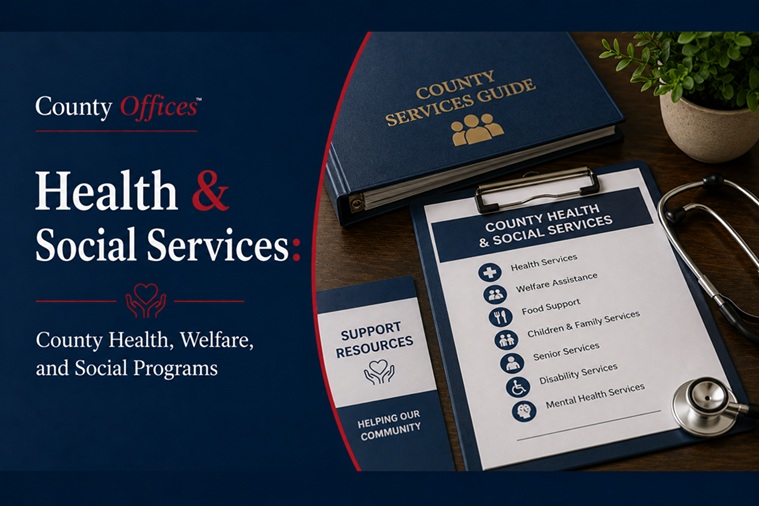
This county health guide covers what every individual and family needs to know about Medicaid, food assistance, WIC, county health department services, and the social services programs available at the local level. County health and social services matters generate substantial search traffic because the rules are complex, eligibility varies by state, and millions of Americans rely on these programs for healthcare, nutrition, and family stability. This county health guide explains how Medicaid eligibility works, how to apply for SNAP and WIC, what services the county health department provides, how to navigate the ACA marketplace, and where state law meaningfully differs from the federal process. Every state-specific county health guide linked from this page is written for the specific eligibility rules, application procedures, and county programs that apply where the family lives.
What this county health guide covers
The health and social services topic spans more ground than most families realize. This county health guide and the supporting state guides cover six distinct areas of health and social services practice, each with its own state-specific variations.
Medicaid coverage and eligibility. Medicaid is the joint federal-state program providing health coverage for low-income individuals of all ages. Eligibility varies significantly by state because Medicaid is jointly administered. Categories include low-income families with children, pregnant women, seniors, people with disabilities, and (in expansion states) low-income adults without children. Application is through the state Medicaid agency, often administered through county social services offices.
SNAP and food assistance. SNAP (Supplemental Nutrition Assistance Program), formerly food stamps, provides electronic benefits for purchasing food to low-income individuals and families. Eligibility is based on household income, assets, and composition. Application is typically through the state social services agency, with implementation through county offices. Benefits are loaded on EBT cards used at authorized retailers.
WIC nutrition assistance. WIC (Women, Infants, and Children) provides nutrition assistance to pregnant women, postpartum women, infants, and children up to age 5 who are at nutritional risk and meet income guidelines. WIC is administered through state agencies, typically operated through county health departments. Benefits include vouchers for specific nutritious foods, breastfeeding support, and nutrition education.
Medicare coverage for seniors. Medicare is the federal health insurance program for people age 65+, certain younger people with disabilities, and people with End-Stage Renal Disease. Medicare has four parts: Part A (hospital), Part B (medical), Part C (Medicare Advantage), and Part D (prescription drugs). Eligibility is based on age and Social Security work history, not income. The interaction between Medicare and Medicaid for dual-eligible seniors creates planning complexity.
ACA marketplace and health insurance. The Affordable Care Act marketplace (Healthcare.gov for most states or state-run exchanges in some states) sells health insurance plans with income-based subsidies for individuals and families who do not have affordable coverage through employers. Open enrollment runs November through January for coverage beginning the following year. Special enrollment periods are available for qualifying life events.
County health department services. County health department services vary but typically include public health services (immunizations, communicable disease control, restaurant inspections, environmental health), maternal and child health programs, clinical services for low-income residents, vital records for events in the county, sexually transmitted infection testing and treatment, family planning services, and emergency preparedness. Contact your specific county health department for available services.
Universal county health guide: how health programs work regardless of state
Five core questions apply to county health matters regardless of which state controls. Each universal county health guide linked here addresses one of them in depth.
How to apply for Medicaid. Apply through your state’s Medicaid agency, typically administered by the state Department of Health or county social services office. Application requires documentation of income, assets, residency, citizenship status, and household composition. Eligibility limits vary significantly by state. Some seniors qualify for Medicaid for long-term care benefits even when they would not qualify for regular Medicaid based on income. The county health guide on Medicaid application walks through each step.
How to apply for SNAP. Apply through the state social services agency, typically administered through county offices. Most states allow online application. Required documentation includes proof of income, household composition, residency, and expenses (housing costs, childcare, medical expenses for elderly or disabled household members). The USDA SNAP page covers federal rules. The county health guide on SNAP application covers state and county variations.
How to apply for WIC. Apply through the state WIC agency, typically operated through county health departments. Application requires proof of identity, residency, income, and pregnancy or child’s age. WIC has a categorical eligibility test (pregnant, postpartum, breastfeeding, or child under 5) plus an income test. Some applicants who qualify for Medicaid, SNAP, or TANF automatically qualify for WIC. The county health guide on WIC application covers eligibility and procedures.
Common county health benefit mistakes. Applicants underestimate income on the application and face audits. They fail to report changes in income or household composition. They miss recertification deadlines and lose benefits. They confuse Medicaid eligibility with ACA marketplace eligibility. They do not know about county programs they qualify for and miss benefits entirely. The county health guide on common mistakes catalogs the costly errors.
When you need health benefit assistance. Most applicants can apply for health and social services benefits without professional help. Assistance is appropriate for complex situations involving disability claims, long-term care Medicaid spend-down planning, denied applications requiring appeal, immigration status complications, and benefit overpayment disputes. State and county social services offices provide free application help. Legal aid organizations help with denials and disputes. The county health guide on getting help covers resources.
County health guide by state
State law and policy control significant aspects of county health services. Medicaid eligibility rules, SNAP procedures, ACA marketplace operation (state versus federal), and county program structures all vary by state. Florida operates through state-controlled Medicaid with relatively strict eligibility limits. Texas has not expanded Medicaid under the ACA. California has expanded Medicaid (called Medi-Cal in California) with broad eligibility. New York operates a state-run ACA marketplace with state-specific Medicaid expansion. Each state-specific county health guide is written for the specific eligibility rules, application procedures, and county programs that apply.
State county health guide coverage at launch:
- Florida county health guide
- Texas county health guide
- California county health guide
- New York county health guide
- Illinois county health guide
State county health guide content for the remaining 45 states is being added as the site expands.
What makes county health different across states
Beyond the universal county health guide content and state-specific procedures, certain state-level distinctions shape outcomes significantly.
Medicaid expansion status. States that expanded Medicaid under the Affordable Care Act extended eligibility to most low-income adults regardless of family status. Non-expansion states retain stricter eligibility limits that exclude many low-income adults. The Kaiser Family Foundation Medicaid expansion map maintains current expansion status. The expansion decision affects millions of low-income adults and significantly changes coverage availability between states.
ACA marketplace operation. Most states use the federal Healthcare.gov marketplace. Some states (California’s Covered California, New York State of Health, Connect for Health Colorado, and others) operate state-based marketplaces. State-based marketplaces sometimes offer enhanced subsidies, broader plan options, or specific state programs. The Healthcare.gov state-by-state marketplace directory directs to the appropriate marketplace.
Medicaid asset limits. Federal Medicaid sets minimum asset limits, but states can raise them. The community spouse resource allowance (the assets a community spouse can keep while the other receives Medicaid) varies by state within federal guidelines. The home equity limit on Medicaid eligibility also varies. State Medicaid policies significantly affect spend-down planning for long-term care applicants.
SNAP categorical eligibility. Most states use Broad-Based Categorical Eligibility for SNAP, which simplifies eligibility by tying it to receipt of certain non-cash TANF-funded benefits. This effectively raises the gross income limit to 200% of the federal poverty level in many states. A few states use the federal default of 130% gross income. Categorical eligibility rules affect how many households qualify for SNAP benefits.
Public charge rules and immigration. Federal public charge rules affect immigration status for non-citizens who use certain public benefits. The 2022 public charge rule limits which benefits count toward public charge determinations. Most benefits (SNAP, Medicaid for children and pregnant women, WIC, school lunch) do not count toward public charge. The USCIS public charge resources cover current rules. Mixed-status families should consult immigration counsel.
Recommended county health guide resources
The right resource depends on what you need to accomplish.
For federal health program information, Medicare.gov covers Medicare eligibility, enrollment, and benefits. Medicaid.gov covers federal Medicaid rules and state-by-state policies. Healthcare.gov handles the federal ACA marketplace and directs to state marketplaces where applicable. USDA SNAP and USDA WIC cover federal food and nutrition programs.
For local health resources, the HRSA Find a Health Center tool locates Federally Qualified Health Centers (FQHCs) that provide healthcare on a sliding fee scale based on income. The National Association of Free and Charitable Clinics maintains a directory of free clinics operating through volunteer providers and nonprofit organizations. Charity care programs at hospitals also provide free or reduced-cost care for qualifying low-income patients.
For senior health programs, the Eldercare Locator is the federal directory connecting seniors and families with local senior services. State Health Insurance Assistance Programs (SHIP) provide free Medicare counseling in every state. The State Health Insurance Assistance Programs directory locates state SHIP offices. The senior-specific seniors and aging guide covers senior health programs in depth.
For application assistance, local Community Action Agencies provide help with benefit applications, eligibility screening, and follow-up. The Community Action Partnership directory locates local agencies. State 2-1-1 services connect callers with health and human services in their county. United Way 211 is available in most areas by dialing 211 or visiting 211.org.
For appeal and dispute resolution, state legal aid organizations provide free legal help with benefit denials and disputes. The Legal Services Corporation maintains a directory of LSC-funded legal aid programs by state. Most states also have specialized health law projects within legal aid that focus on Medicaid, SNAP, and health insurance disputes.
Frequently asked questions
The county health guide questions readers ask most often when starting any research come down to a handful of practical concerns. Each county health guide answer below covers the universal framework; specific procedures vary by state.
Who qualifies for Medicaid?
The county health guide framework for Medicaid eligibility starts with state-specific rules because Medicaid is a joint federal-state program. Income limits are the primary eligibility factor, typically expressed as a percentage of the federal poverty level. Categories include low-income families with children, pregnant women, seniors, people with disabilities, and (in expansion states) low-income adults without children. Apply through your state Medicaid agency or the Healthcare.gov marketplace.
What is the difference between SNAP and food stamps?
SNAP stands for Supplemental Nutrition Assistance Program, which is the current name for what was historically called food stamps. The program provides electronic benefits (loaded on EBT cards) to low-income individuals and families for purchasing food. Eligibility is based on household income and assets. The USDA SNAP page covers federal rules. State SNAP programs administered through county social services offices implement the program locally.
How do I apply for WIC?
WIC (Women, Infants, and Children) provides nutrition assistance to pregnant women, postpartum women, infants, and children up to age 5 who are at nutritional risk and meet income guidelines. Apply through the state WIC agency, typically administered through county health departments. The USDA WIC page covers the program nationally. Application requires proof of identity, residency, income, and pregnancy or child’s age. WIC benefits include vouchers for specific nutritious foods, breastfeeding support, and nutrition education.
What is the difference between Medicare and Medicaid?
Medicare is a federal health insurance program for people age 65+, certain younger people with disabilities, and people with End-Stage Renal Disease. Medicaid is a joint federal-state program for low-income individuals. Eligibility is based on income and other factors. Some people qualify for both (dual eligible). The Medicare.gov and Medicaid.gov sites cover each program in detail.
How do I find a free clinic?
The county health guide approach starts with Federally Qualified Health Centers (FQHCs), which provide healthcare on a sliding fee scale based on income. The HRSA Find a Health Center tool locates FQHCs nationwide. Free clinics operate in many communities, often through volunteer healthcare providers and nonprofit organizations. The National Association of Free and Charitable Clinics maintains a directory. Charity care programs at hospitals also provide free or reduced-cost care.
How do I apply for TANF?
TANF (Temporary Assistance for Needy Families) provides cash assistance to low-income families with children. Apply through the state TANF agency, typically administered through county social services offices. The HHS Office of Family Assistance provides national program information. Eligibility requires very low income, presence of a minor child or pregnancy, and participation in work or job training activities. Benefits and time limits vary by state. TANF benefits are time-limited (typically a 60-month lifetime maximum).
What services does the county health department provide?
County health department services vary but typically include public health services (immunizations, communicable disease control, restaurant inspections, environmental health), maternal and child health programs, clinical services for low-income residents, vital records (birth and death certificates) for events in the county, sexually transmitted infection testing and treatment, family planning services, and emergency preparedness. The county health guide for your state covers state-by-state variations.
How do I apply for food assistance?
Food assistance programs include SNAP (federal food assistance), WIC (women and children), TEFAP (food bank assistance), and local food pantries. Apply for SNAP through the state social services agency, often using the same application as Medicaid and TANF. Apply for WIC through the county health department. Find local food pantries through Feeding America. State guides cover specific application procedures and benefit levels.
What is Medicaid for long-term care?
Medicaid covers long-term care services including nursing home care, home and community-based services, and personal care services for eligible low-income seniors and disabled individuals. Eligibility for long-term care Medicaid has different income and asset limits than regular Medicaid. The five-year look-back period means transfers of assets within the five years before application can trigger penalties. The seniors guide covers the process in detail.
How do I appeal a denied Medicaid application?
Every state must provide an appeal process for Medicaid denials. File the appeal in writing with the state Medicaid agency within the deadline (typically 90 days from the denial notice). Appeals can be heard administratively without an attorney, though legal representation often improves outcomes. Common reasons for denial include income or asset limits, missing documentation, citizenship verification issues, and procedural errors. Many denials are overturned on appeal when applicants address the specific reason for denial.
What is the Affordable Care Act marketplace?
The ACA marketplace (Healthcare.gov for most states or state-run exchanges in some states) sells health insurance plans with income-based subsidies (premium tax credits) for individuals and families who do not have affordable coverage through employers. Open enrollment typically runs November through January for coverage beginning the following year. Special enrollment periods are available for qualifying life events. Many Medicaid-ineligible low-income individuals qualify for substantial marketplace subsidies.
How do I report public assistance fraud?
Report suspected fraud to the state agency administering the program. Most state social services agencies maintain fraud hotlines. Federal program fraud (Medicare, federal SNAP) can be reported to the HHS Office of Inspector General or the USDA Office of Inspector General. Reports can typically be made anonymously. Fraud investigation can lead to benefit termination, restitution, and criminal prosecution.
Related life event topics
County health and social services matters frequently overlap with other county-level life events. The topics most commonly connected to this county health guide:
Seniors and aging. Medicare and Medicaid coverage decisions are core senior health matters. Long-term care Medicaid involves spend-down planning. Senior health programs intersect with the broader county health guide framework for adults under 65 transitioning to Medicare.
Birth and vital records. Birth certificates are required for many county health program applications. Death certificates trigger Medicare and Medicaid termination procedures. Vital records intersect with health program administration through identity verification.
Marriage and divorce. Marital status affects Medicaid eligibility, ACA marketplace subsidies, and SNAP household composition. Divorce can change eligibility status quickly. Same-sex marriages affect spousal benefits in all federal programs.
Tax and finance. ACA marketplace subsidies are reconciled at tax time through Form 1095-A. Medicaid spend-down has federal income tax implications. SNAP and other benefits are not taxable income but affect overall financial planning.
Court records and legal. Benefit denials may require administrative appeal or court action. Disability determinations involve administrative law judges. Fraud investigations create court records. Domestic violence orders can affect program eligibility through emergency procedures.
Sources and references
The county health guide content on CountyOffices is based on federal health and social services programs, state Medicaid policies, and county health department procedures. Source materials include federal regulations under the Social Security Act, USDA SNAP and WIC regulations, ACA implementation guidance, and state Medicaid plan documents.
External authority sources cited in this county health guide:
- Medicaid.gov (federal Medicaid resources)
- Medicare.gov (federal Medicare program)
- Healthcare.gov (ACA marketplace)
- USDA SNAP (federal food assistance)
- USDA WIC (nutrition for women and children)
- HRSA Find a Health Center (Federally Qualified Health Centers)
- HHS Office of Family Assistance (TANF program)
- USCIS public charge resources (immigration public charge rules)
- Kaiser Family Foundation Medicaid expansion map (state expansion status)
- Community Action Partnership (local agency directory)
- Legal Services Corporation (legal aid directory)
- 211.org (United Way health and human services)
- Feeding America (local food banks)
Each state county health guide cites the relevant state code sections, Medicaid policies, and county health department procedures specific to that state. Last reviewed dates are visible on every county health guide.
This county health guide is informational only and does not constitute medical, legal, or financial advice. Consult appropriate professionals for advice specific to your situation.